Decor guide
How to Style a Bohemian Home with Cushions, Runners and Poufs
A practical guide to layering handmade textiles: which pieces to buy first, how to mix cushions and lumbars with table linen, and how to finish a room with sofa covers and wooden poufs.
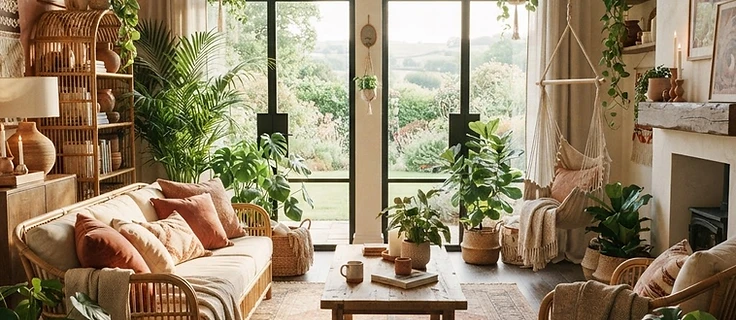
Bohemian décor is not about filling a room. It is about layering a few handmade, tactile things until the space feels lived in: a woven cushion here, a runner that softens a hard table, a pouf that doubles as a seat. Everything below can be mixed, moved and rebuilt as the seasons change.
Begin with cushions and lumbars
Cushions are the fastest way to make a room feel bohemian: they add colour, texture and pattern without touching a single wall. Start with square cushion covers in one base tone, then add a lumbar in a contrast weave. Lumbars are the quiet workhorses of a sofa — the long narrow shape gives lower-back support and holds a layered arrangement together. If you want the easiest finished look, choose two squares plus one lumbar per seating spot and keep every cover in the same family of warm neutral tones.
Layer the table with linen
A table runner does more than decorate a dining table: it defines the centre line of the room and protects the surface where hands and serving dishes land. Bohemian styling works best when a runner overhangs the ends by 15 to 25 cm and is echoed by woven place mats. Keep the tableware plain so the weave and embroidery can lead, and repeat one colour from the runner in the cushions behind the table to tie the spaces together. Handblock and embroidered runners are both durable enough for everyday family meals, not only for occasions.
Sofa covers and poufs finish the room
Sofa covers let you change the mood of a living room without replacing furniture, and they are sold per seat so you can cover one worn cushion or the whole set. Pair them with a wooden pouf used as a side table, a footrest or extra seating when guests arrive. A pouf with a woven or macrame body looks best against a plain rug and a low tray of candles; it also gives small rooms a flexible seat that moves where it is needed.
Choosing sizes, fabrics and colours
Work from large to small. Pick the runner or sofa cover first because it covers the most surface, then match cushions to it. Cotton and cotton-linen blends are the safest choice in Indian homes: they breathe in summer, survive frequent washing and hold block-print colour well. Reserve heavily embroidered pieces for low-traffic surfaces and keep the busiest patterns away from eye level. A restrained palette of terracotta, cream, clay and sage reads bohemian without becoming busy, and it lets a single patterned cover act as the accent.
Common questions
What is a lumbar cushion used for?
A lumbar is a long, narrow cushion that supports the lower back. Place it in front of a square cushion on a sofa or bed headboard so it holds the small of your back upright.
How many cushions does a sofa need?
A two-seater usually reads best with three to four cushions, mixing one lumbar with two squares, while a three-seater can take five to six. Keep the largest cushions in the corners and the smallest in the middle.
Should a table runner hang over the edge?
Yes. A runner that overhangs 15 to 25 cm on each end looks intentional and protects the table edge, while a length that stops exactly at the edge tends to look accidental.
How do I wash handmade cushion covers and runners?
Wash cotton and linen on a gentle cold cycle inside out, then air dry in shade. Spot clean embroidery and macrame by hand, and never tumble dry a piece with heavy embellishment.
Every piece in our collection is handmade in small batches, so weaves and prints vary slightly from one cover to the next. If you would like help matching pieces for a room, send us a photograph of the space through the contact page and we will suggest a combination.